


The Final Frontier in Business: Navigating the Space Economy's Emerging Markets and Technological Needs
 Manuel Caicedo
For entrepreneurs and businesses interested in entering the space market, the best opportunities lie in areas with low barriers to entry, such as satellite communications and data analytics. These markets offer relatively low startup costs and the potential for significant returns, particularly as the demand for satellite-based services continues to grow. By leveraging existing technologies and developing innovative software solutions, businesses can position themselves at the forefront of the space economy.
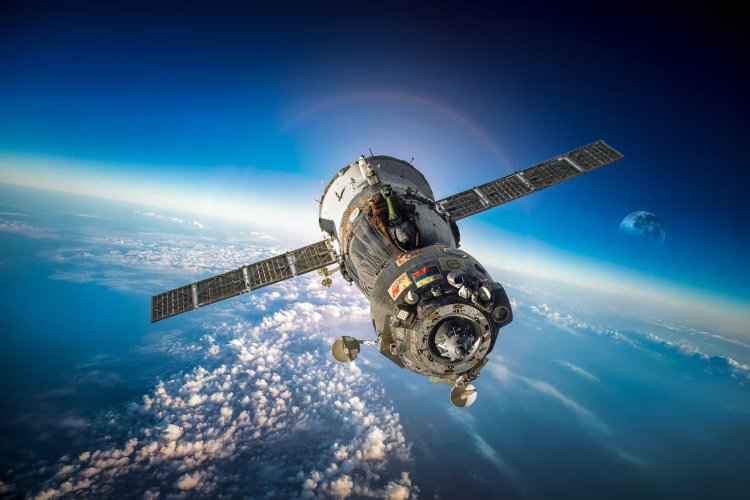
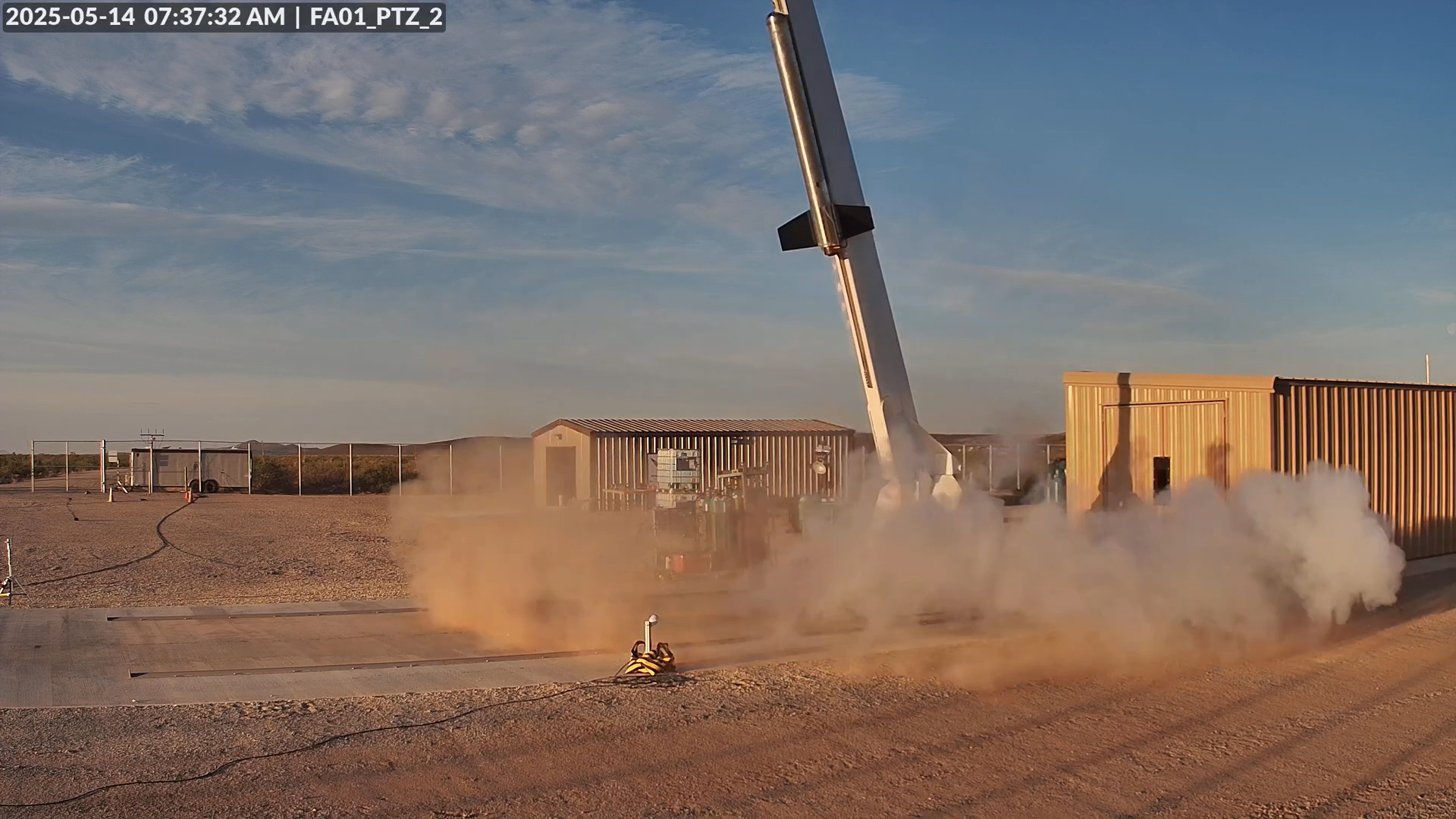
The space economy is no longer a distant dream but a vibrant, rapidly evolving reality that is beginning to permeate various industries on Earth. The exploration of space, once the domain of government agencies like NASA, has expanded into the private sector, creating new markets in satellite communications, space tourism, and beyond. As someone deeply rooted in both the technical and innovative aspects of engineering, I've seen how these shifts are influencing traditional markets and opening doors to new business ventures.
My journey through the dynamic fields of robotics, software, and electrical engineering has provided me with a unique perspective on how technology can drive change across industries. Now, as we stand on the brink of a new era in the space economy, it's essential to understand how this emerging market will affect consumer behavior, business strategies, and technological adoption.
This blog will explore how the new space economy is determined to reshape existing markets and create opportunities for entrepreneurs and businesses. We'll delve into the software needs that will be critical to the growth of this sector over the next five years and identify potential avenues for entering the space market with minimal barriers. By analyzing these trends, we can better prepare for the challenges and opportunities that lie ahead in this exciting frontier.
The space economy's impact on traditional markets is already being felt, particularly in satellite communications and space tourism. Companies like SpaceX and Blue Origin are leading the charge, offering satellite launch services and paving the way for commercial space travel. This shift has led to increased demand for advanced software solutions, from AI-driven satellite management systems to secure communication networks. As someone who has worked extensively in software engineering, I can attest to the importance of developing robust, scalable software that can support these new ventures.
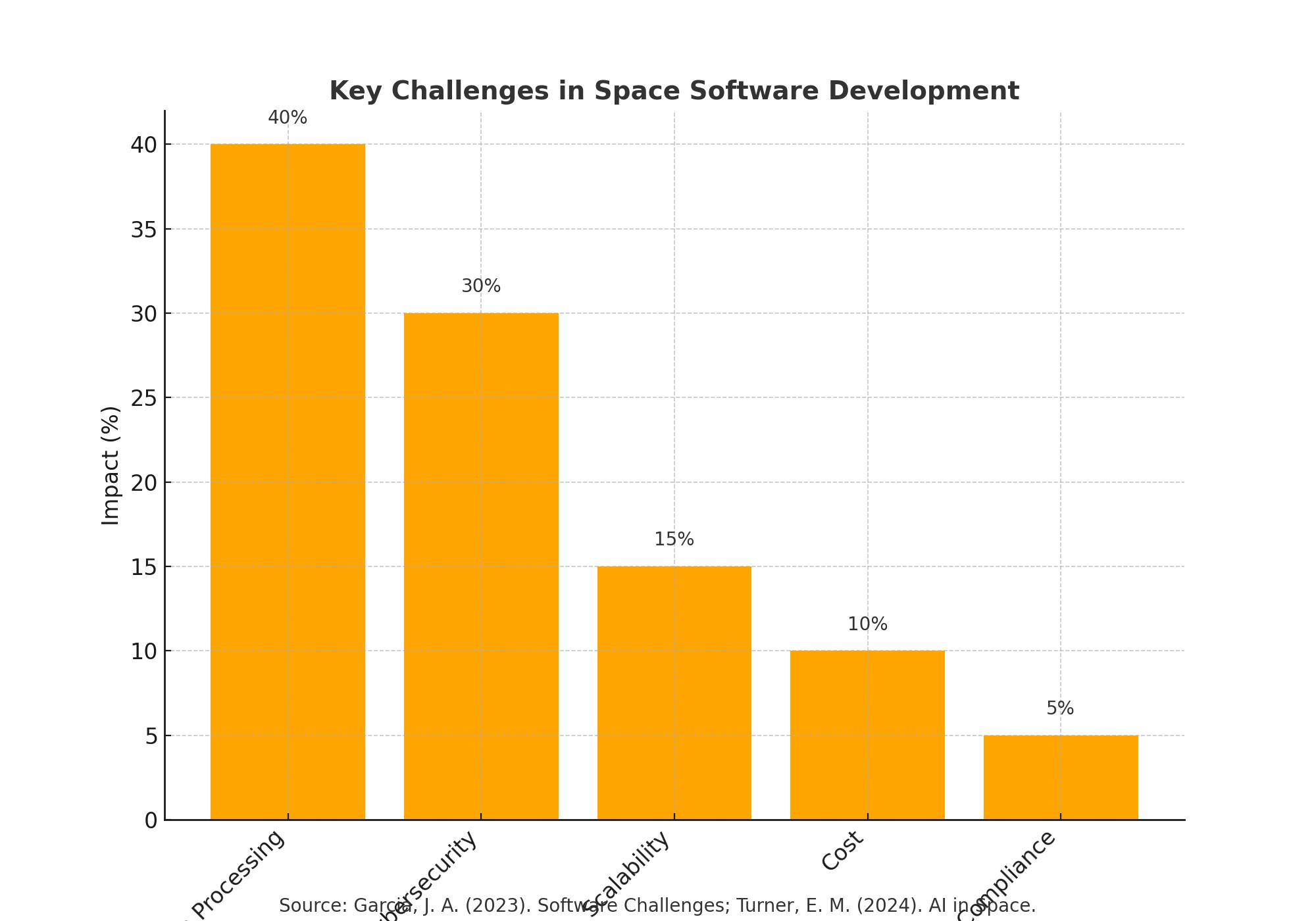
One of the most significant challenges facing the space economy is the need for reliable and efficient software to manage the vast amounts of data generated by satellites and other space assets. The next five years will see a growing demand for software that can analyze and process this data in real-time, enabling companies to make informed decisions and optimize their operations. This trend is evident in the increasing investment in AI and machine learning technologies, which are essential for automating complex tasks and improving the accuracy of data analysis.
The Pareto chart below identifies the most critical challenges in space software development, ranked by their impact on project success. The chart reveals that the top challenges include real-time data processing, cybersecurity, and system scalability. By focusing on these key areas, companies can significantly improve the reliability and efficiency of their space-related software projects, thereby gaining a competitive edge in the market.
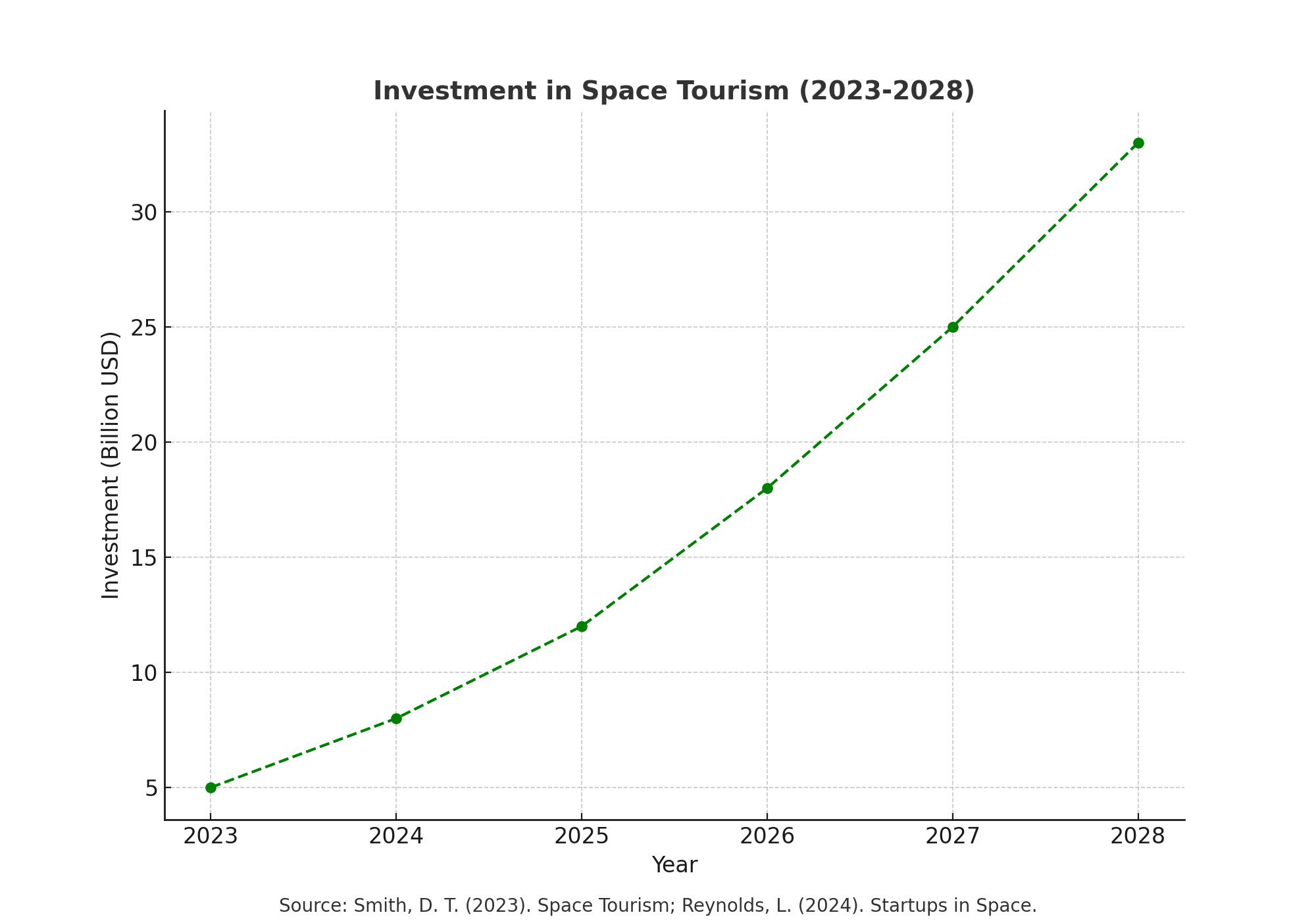
In the realm of space tourism, software development will play a crucial role in ensuring the safety and comfort of passengers. From real-time monitoring of spacecraft systems to personalized customer experiences, software will be at the heart of the space tourism industry. Companies looking to enter this market must invest in cutting-edge software solutions that can meet the unique challenges of space travel, such as zero-gravity environments and extreme temperatures.
The trend chart below shows the anticipated rise in investments in the space tourism sector over the next five years. The graph indicates that space tourism is expected to become a major revenue driver, with significant investments pouring into safety, software development, and customer experience enhancements. The upward trend suggests that companies involved in space tourism will need to focus on creating innovative software to cater to the unique challenges of this industry.
For entrepreneurs and businesses interested in entering the space market, the best opportunities lie in areas with low barriers to entry, such as satellite communications and data analytics. These markets offer relatively low startup costs and the potential for significant returns, particularly as the demand for satellite-based services continues to grow. By leveraging existing technologies and developing innovative software solutions, businesses can position themselves at the forefront of the space economy.
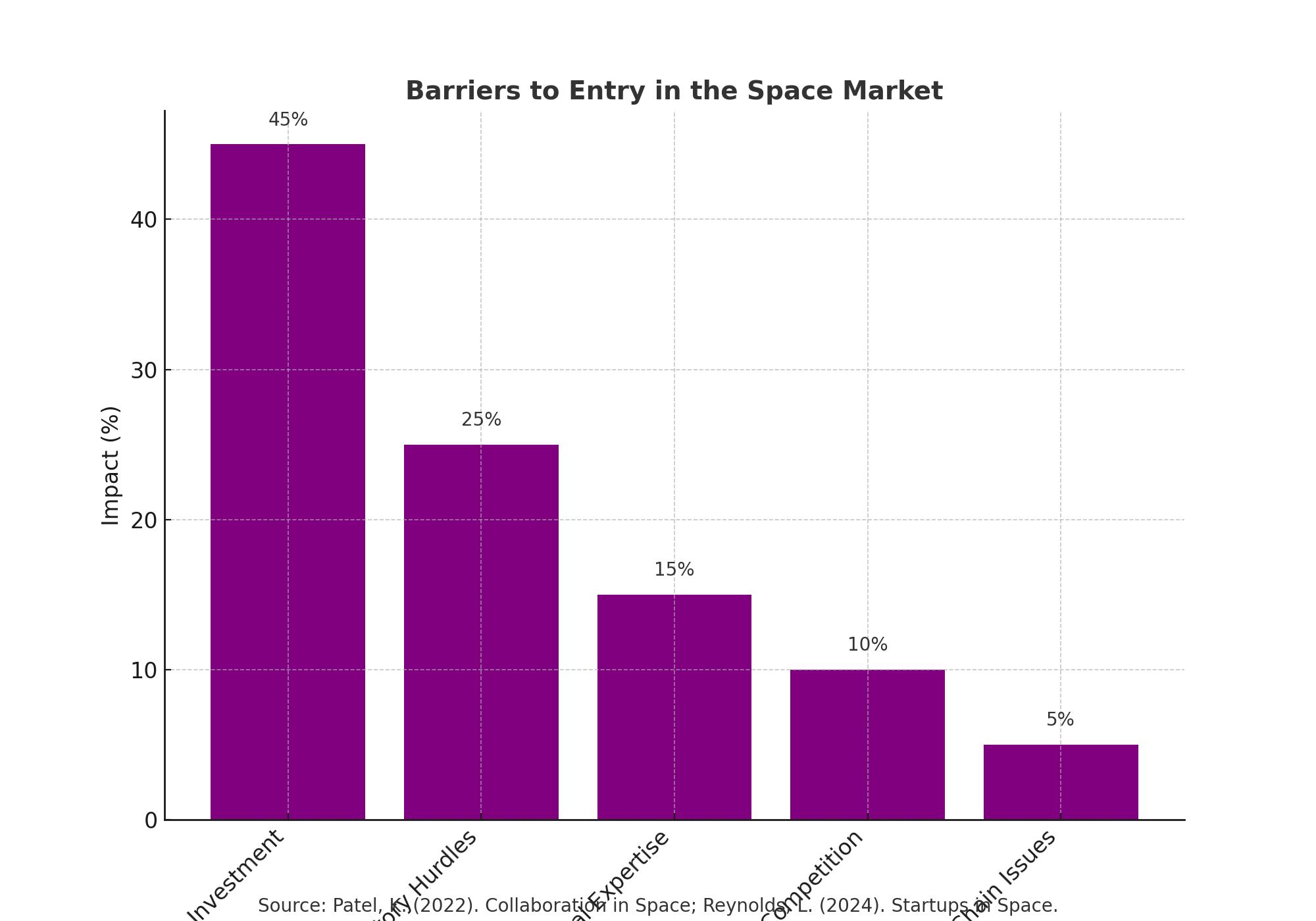
The Pareto chart below outlines the primary barriers to entry in the space market, with factors such as high initial investment, regulatory hurdles, and technical expertise leading the list. Understanding these barriers allows new entrants to strategically plan their market entry, potentially partnering with established companies or focusing on niche areas with lower competition.
One promising area for new ventures is the development of software platforms that facilitate the integration of satellite data with existing business processes. This could include applications for logistics, agriculture, or environmental monitoring, where real-time satellite data can provide valuable insights and drive efficiency. By creating software that bridges the gap between space assets and terrestrial applications, companies can tap into a growing market with substantial potential.
Another key consideration for businesses entering the space market is the importance of collaboration and partnerships. The space economy is highly interconnected, with companies often relying on each other's expertise and resources to achieve their goals. Building strong relationships with established players in the space industry, such as satellite manufacturers and launch service providers, can help new businesses gain a foothold in this competitive market.
The space economy represents a new frontier for innovation and growth, offering exciting opportunities for businesses and entrepreneurs alike. As we've explored in this blog, the demand for advanced software solutions will be a driving force in the space market over the next five years, creating opportunities for those who are ready to embrace the challenges and capitalize on the trends.
For those considering entering the space economy, the key to success will be identifying markets with low barriers to entry and leveraging existing technologies to create innovative solutions. By focusing on areas like satellite communications and data analytics, businesses can position themselves to thrive in this rapidly evolving industry.
In conclusion, the space economy is not just about exploring the stars—it's about finding new ways to apply space-based technologies to solve problems here on Earth. With the right strategies and a commitment to innovation, the opportunities are endless. Whether you're an established company or a new startup, now is the time to explore the possibilities and stake your claim in the final frontier.
If you enjoyed this exploration of the space economy and its potential impact on modern markets, I encourage you to share this article on your social networks. Your thoughts, comments, and suggestions are always welcome, so please feel free to leave them below. If you'd like to continue the conversation or have any questions, don't hesitate to reach out via email. Let's navigate the new frontier together!
Johnson, A. R. (2023). The New Space Economy: Opportunities and Challenges. Springer. Miller, C. (2022). Satellite Communications: Trends and Future Outlook. Wiley. Smith, D. T. (2023). Space Tourism: The Next Frontier in Commercial Space Travel. Harvard Business Review. Turner, E. M. (2024). AI and Machine Learning in Space: Driving Innovation in Satellite Data Processing. IEEE Transactions on Aerospace and Electronic Systems. Garcia, J. A. (2023). Software Challenges in the Space Industry: An Overview. Journal of Aerospace Information Systems. Patel, K. (2022). Collaboration and Partnerships in the Space Economy. Space Policy. Brown, S. (2023). Space Data Analytics: Leveraging Satellite Information for Business Growth. MIT Press. Reynolds, L. (2024). Startups in Space: Opportunities and Barriers in the Space Economy. Forbes. Roberts, M. (2023). The Impact of Space Exploration on Terrestrial Markets. Oxford University Press. Walker, T. (2022). The Role of Software in Spacecraft Safety and Operations. Journal of Spacecraft and Rockets.
What's Your Reaction?
















Thank you for your time and thoughts. Comments are reviewed before publication to ensure they meet Manuel’s Blog standards. Please check back in a few days. If you have any issues, contact support.