


From Idea to Impact: Engineering XmartPro.ai with AI as My Development Partner
 Manuel Caicedo
A hands-on story of how I combined 20+ years in engineering, product, and project leadership with AI to build XmartPro.ai—one connected SaaS from Discover to DevOps to SSE. Request a demo.
Introduction
For most of my career I have been fascinated by the intersection between engineering discipline and technological innovation. Over the past twenty years I have worked across electrical engineering, software development, product management, and large-scale project leadership. Each stage of that journey exposed me to complex systems and the challenge of coordinating multiple teams, technologies, and objectives. When artificial intelligence began to rapidly evolve in recent years, I immediately saw the potential for it to reshape how engineers design, build, and deliver software. What began as curiosity quickly evolved into a deeper experiment: could AI become an engineering partner capable of accelerating the creation of real enterprise software platforms?
My exploration started with reading research papers, books, and technical publications about artificial intelligence and generative models. As tools like ChatGPT and Gemini matured, I began experimenting with them not only for information retrieval but for practical engineering tasks. I tested how effectively they could generate architecture proposals, data models, UI concepts, and algorithmic implementations. These experiments were revealing. AI proved capable of producing high-quality engineering output, but only when guided by strong technical reasoning. Without clear direction the results could be inconsistent. With disciplined engineering structure, however, the technology became a powerful accelerator for building complex solutions.
Throughout my career I repeatedly encountered a recurring problem inside organizations: fragmentation across the product development lifecycle. Product ideas were captured in one tool, project execution tracked in another, DevOps metrics monitored somewhere else, and customer support insights stored in separate systems. Teams spent significant time switching between tools just to understand how their work aligned with broader strategic goals. This fragmentation often made it difficult to trace how engineering initiatives contributed to business outcomes such as OKRs and KPIs. I began wondering whether the real opportunity was not just improving tools individually, but integrating them into a unified system.
That realization became the foundation for XmartPro.ai, a platform designed to connect the entire innovation lifecycle. Instead of fragmented tools, the platform integrates product discovery, project execution, DevOps monitoring, and continuous improvement into one cohesive environment. The goal is not simply to manage tasks but to create a connected intelligence system where insights flow seamlessly across every stage of development. By combining AI-assisted engineering with integrated lifecycle management, XmartPro.ai enables teams to move from idea to impact faster while maintaining the discipline required to build reliable enterprise software.
The Problem: Fragmented Product Development
Modern software organizations rely on dozens of specialized tools to manage different aspects of development. While each tool solves a specific operational problem, the overall lifecycle often becomes fragmented. Product managers may define strategy in roadmap platforms, engineers manage development tasks in ticketing systems, DevOps teams monitor deployments through infrastructure dashboards, and support teams track customer issues in service platforms. Although these tools are individually powerful, the lack of integration between them creates gaps in visibility and coordination. Teams frequently struggle to understand how daily engineering work connects to strategic product objectives or customer outcomes.
This fragmentation becomes especially problematic as organizations scale. When teams grow larger and products become more complex, the number of systems used to coordinate work increases dramatically. Engineers may need to consult multiple platforms just to gather context for a single task. Product leaders often rely on manual reports to understand development progress. Operational insights from production environments may never reach product strategy discussions. As a result, decision-making becomes slower and innovation cycles become longer. The inability to connect data across these systems limits the organization’s ability to learn and adapt quickly.
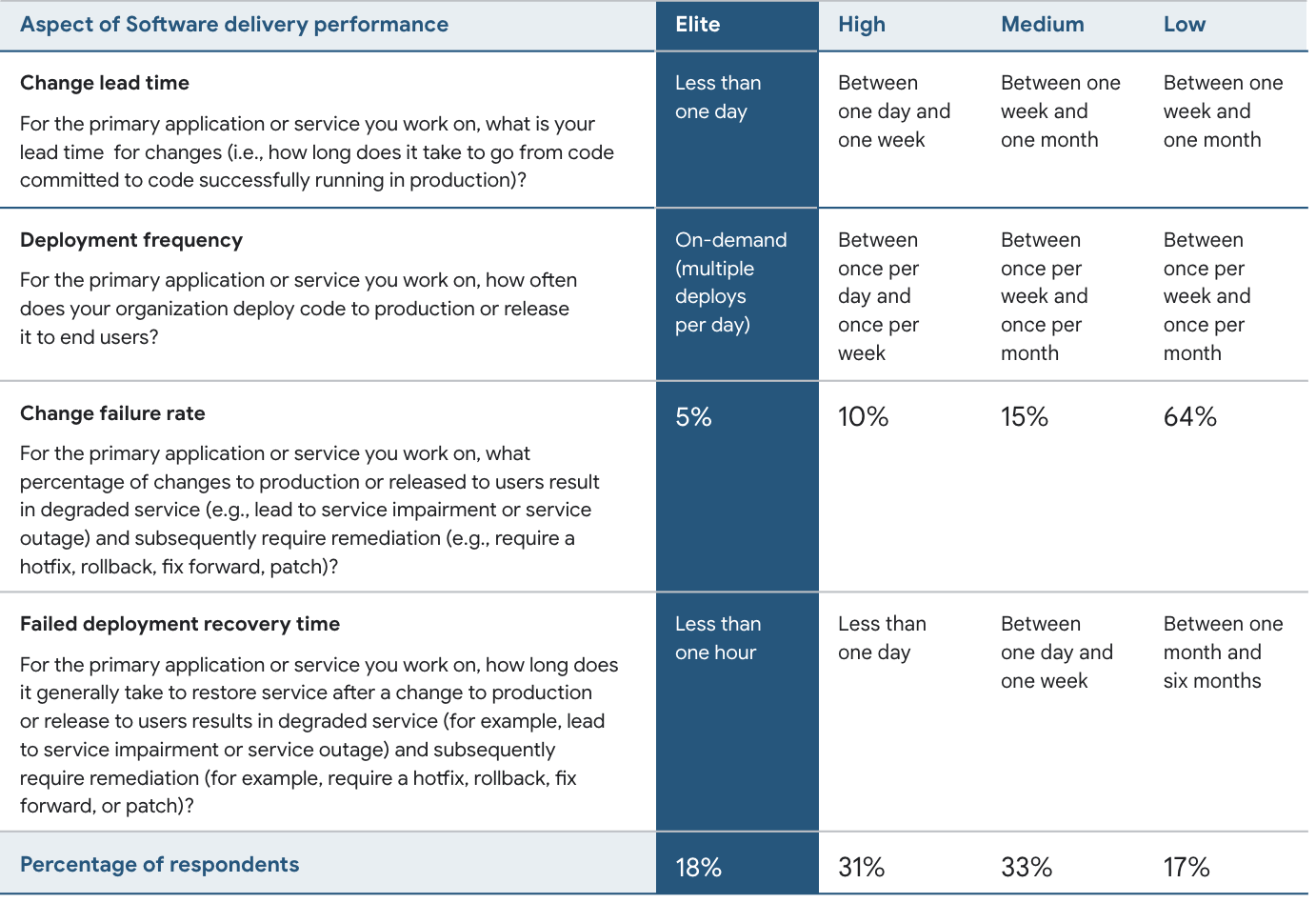
Industry research confirms this challenge. According to the State of DevOps Report from Google Cloud, organizations that integrate development, operations, and product management workflows achieve significantly higher performance outcomes. High-performing engineering teams deploy code far more frequently, recover from failures faster, and deliver features with shorter lead times. These improvements occur not simply because of better tools, but because the lifecycle is integrated and data flows continuously between development stages. This insight reinforced my belief that the future of software development would require platforms designed around connected workflows rather than isolated applications.
XmartPro.ai was designed specifically to address this challenge. Instead of forcing teams to coordinate across multiple tools, the platform integrates product strategy, engineering execution, operational monitoring, and support intelligence into a single environment. Product managers can track how strategic initiatives translate into engineering work. Engineers can understand how their tasks contribute to measurable product outcomes. Operational signals from production systems feed directly into the product lifecycle, enabling continuous improvement. By unifying these domains, XmartPro.ai transforms fragmented processes into a coherent innovation system.
| Capability | XmartPro.ai | Jira | Azure DevOps | Monday |
|---|---|---|---|---|
| Product Discovery | Integrated | Limited | Limited | Basic |
| Roadmap Strategy | Native | Add-ons | Partial | Basic |
| Agile Execution | Integrated | Strong | Strong | Moderate |
| DevOps Monitoring | Integrated | External tools | Built-in | Limited |
| Customer Support Loop | SSE integrated | External | External | External |
| AI Copilot | Native | Limited | Limited | Limited |
| Lifecycle Analytics | Unified | Fragmented | Fragmented | Fragmented |
The AI-Assisted Engineering Experiment
Artificial intelligence is rapidly transforming how software engineers work. Generative models can now assist with coding, documentation, debugging, architecture design, and even testing. According to research published by McKinsey, generative AI tools have the potential to increase developer productivity by 20 to 45 percent across typical software development tasks. This productivity improvement occurs because AI can automate repetitive work such as generating boilerplate code, writing documentation, or suggesting implementation patterns. Engineers can therefore spend more time focusing on higher-level architectural decisions and complex problem solving.
Another study conducted by GitHub analyzing the impact of Copilot revealed that developers using AI assistance completed programming tasks 55 percent faster compared to those working without AI support. These findings illustrate how AI can significantly accelerate development workflows when integrated effectively. However, the research also emphasizes an important point: the technology works best when developers maintain strong oversight and architectural control. AI excels at producing code fragments and exploring implementation alternatives, but human engineers remain essential for guiding system design and ensuring quality.
During the development of XmartPro.ai, I experienced these dynamics firsthand. AI tools were extremely helpful in generating modular components such as API endpoints, interface structures, and data models. However, the architecture of the system still required deliberate engineering design. The most effective workflow emerged when AI was used as a collaborator rather than an autonomous developer. Engineers defined the architecture and requirements, while AI accelerated the implementation of individual components. This partnership allowed development cycles to move much faster while preserving the reliability expected of enterprise software.
The result is a development approach that combines human expertise with AI-assisted acceleration. Engineers remain responsible for defining product vision, system architecture, and quality standards. AI tools help transform those ideas into working software components quickly and efficiently. Within XmartPro.ai this approach is embedded directly into the platform itself, enabling teams to leverage AI capabilities throughout the product development lifecycle.
Architecture Vision
The core concept behind XmartPro.ai is a connected lifecycle platform.
Instead of disconnected tools, the platform integrates four essential domains of modern software organizations:
-
Product Management
-
Project Management
-
DevOps Management
-
SSE Management (Sustain – Support – Evolve)
Below is the high-level business architecture implemented for the platform.

The architecture demonstrates how each domain connects to the others, creating a continuous innovation loop.
XmartPro Lifecycle Architecture
| Domain | Core Capability | Purpose |
|---|---|---|
| Product Management | Discover & Strategy | Define product ideas and validate market needs |
| Project Management | Plan & Execution | Transform ideas into deliverables |
| DevOps | Develop & Operate | Deploy and monitor software systems |
| SSE | Sustain, Support, Evolve | Continuous improvement and customer support |
The lifecycle follows this sequence:
Discover → Product Plan → Develop → Deliver → Operate → Support → Evolve → Discover again.
This creates a continuous feedback loop between strategy, engineering execution, and operational learning.
High-Level Business Architecture
The architecture diagram below represents this lifecycle clearly.

The first diagram illustrates the evolution of the software development lifecycle into a unified solution delivery lifecycle. Instead of separating product management, development, and operations into isolated stages, the model shows how these domains overlap and continuously influence each other. Product management defines strategy, user value, and prioritization. DevOps provides automated pipelines for integration, testing, and deployment. Product delivery sits at the center of the system, ensuring that development efforts translate into usable solutions. This lifecycle reflects the transition from traditional waterfall processes toward continuous development and continuous feedback models.
Within XmartPro.ai, this lifecycle is implemented through the integration of four major domains: Product Management, Project Management, DevOps Management, and SSE (Sustain–Support–Evolve). Product strategy captured in the Discover and Portfolio modules flows directly into the planning and execution layers of project management. From there, development tasks move into DevOps pipelines for deployment and monitoring. Operational insights generated in production environments are captured by the SSE modules and fed back into product discovery. This continuous loop ensures that product decisions are always informed by real usage data and operational intelligence.

The second graphic represents the 7Cs of DevOps, which describe the continuous processes required to achieve efficient software delivery. These include continuous development, integration, testing, deployment, feedback, monitoring, and operations. Together, these stages form a circular workflow where code moves through automated pipelines while feedback continuously informs future improvements. The DevOps philosophy emphasizes automation, rapid iteration, and collaboration between development and operations teams to maintain system reliability while delivering features quickly.
XmartPro.ai integrates these DevOps principles directly into its architecture. Development tasks created within the Project Management domain move through the platform’s DevOps management layer, where CI/CD pipelines, release monitoring, and operational analytics are tracked. Continuous feedback from system monitoring and user interactions flows into the SSE modules. By linking DevOps processes directly to product planning and engineering execution, XmartPro.ai allows organizations to maintain rapid development cycles while ensuring that operational insights influence future product improvements.
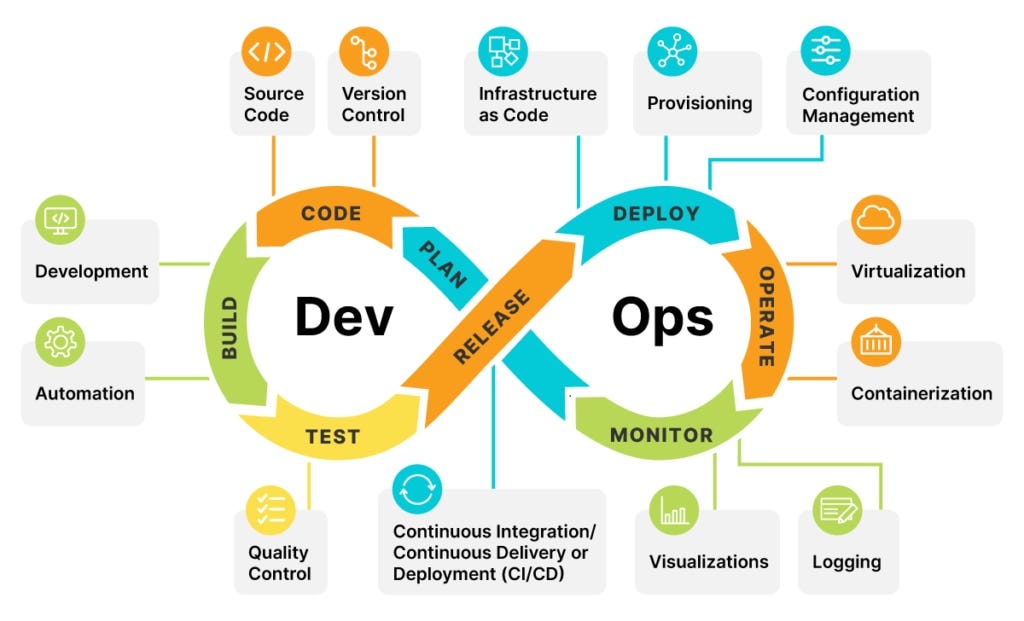
The third diagram illustrates the classic DevOps infinity loop, where development and operations collaborate continuously to deliver reliable software systems. The loop highlights stages such as planning, coding, building, testing, releasing, deploying, monitoring, and feedback. Each stage connects to automation tools that enable continuous integration and delivery. The objective is to reduce the time between idea generation and production deployment while maintaining system stability and quality through automated testing and monitoring processes.
In XmartPro.ai this DevOps loop is embedded directly into the lifecycle architecture. Planning activities originate within the product management and project management modules. Coding and development activities occur within the execution environment supported by AI-assisted development tools. Once features are ready, deployment pipelines and monitoring dashboards managed by the DevOps domain ensure that releases are stable and observable. Feedback gathered through monitoring, incident management, and support interactions flows into the SSE domain, which feeds the insights back into product discovery and roadmap planning. This architecture effectively transforms the DevOps loop into a closed innovation cycle driven by real-time operational intelligence.
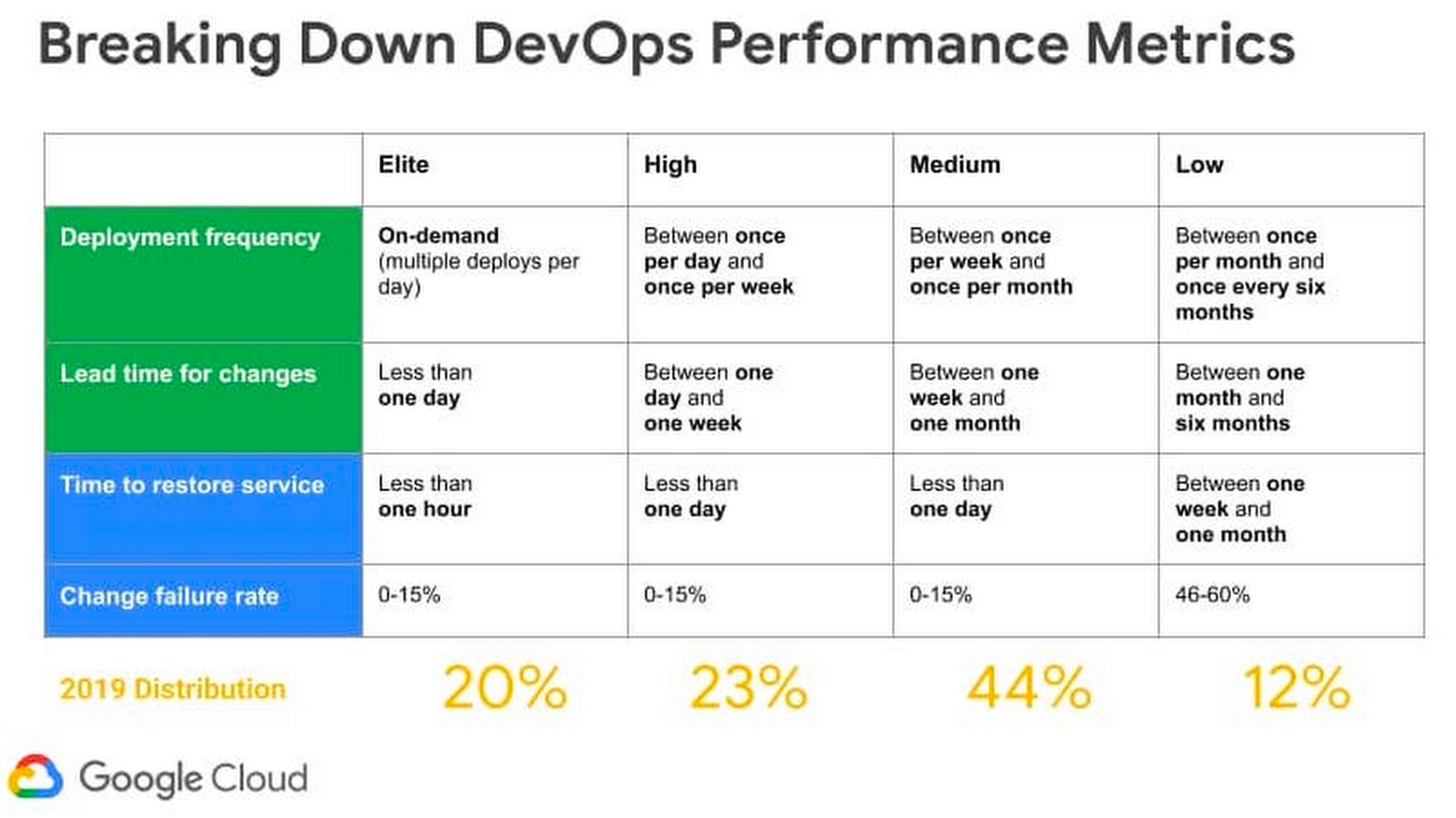
DevOps Performance Research:
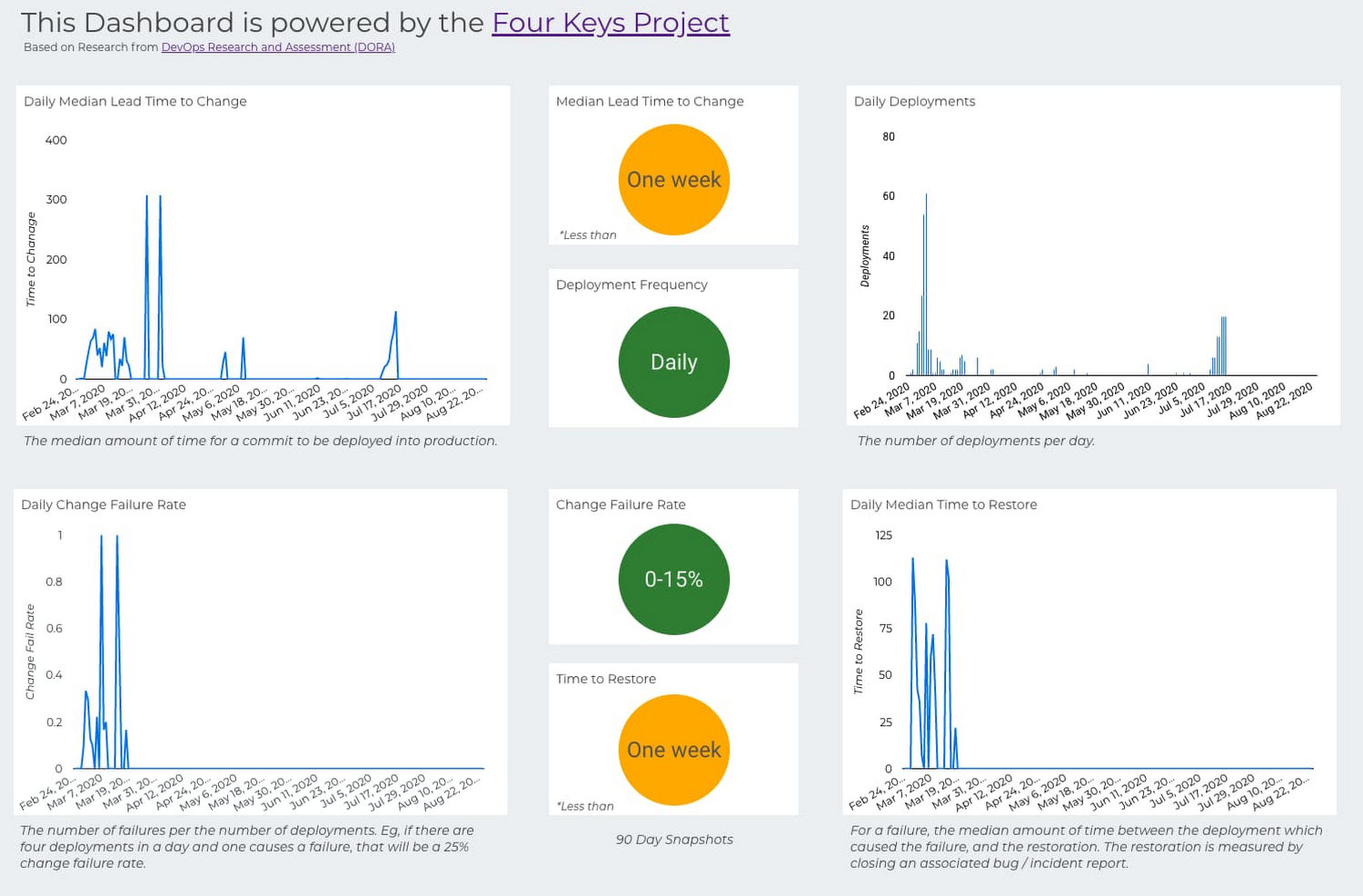
Modern DevOps practices emphasize continuous delivery, automated deployment pipelines, and real-time operational monitoring. Research from the DevOps Research and Assessment (DORA) program has demonstrated that organizations with mature DevOps capabilities significantly outperform their peers. High-performing teams deploy code more frequently, recover from failures faster, and maintain higher levels of system reliability. These outcomes are strongly correlated with integrated development workflows and automated operational feedback loops.
The Xmartpro.ai platform integrates four lifecycle stages:

The architecture of XmartPro.ai is designed around the concept of a connected product lifecycle, where every stage of software development contributes to a continuous flow of information and improvement. Traditional development environments often separate product planning, engineering execution, deployment monitoring, and customer feedback into independent systems. In contrast, XmartPro.ai organizes these activities into a unified architecture that allows data, insights, and decisions to move seamlessly across the lifecycle. This integration ensures that product strategy, engineering execution, and operational intelligence remain aligned throughout the entire development process.
The lifecycle begins in the Product Management domain, where ideas are discovered, analyzed, and prioritized. Within XmartPro.ai, this stage includes modules such as portfolio management, product discovery, and roadmap planning. Product teams can evaluate market opportunities, define user journeys, and translate insights into measurable strategic goals. By capturing these activities within the platform, the system ensures that every engineering initiative can be traced back to a specific product objective or business outcome. This visibility improves alignment between product leaders and engineering teams while reducing the risk of building features that do not deliver meaningful value.
Once product strategy is defined, the lifecycle transitions into the Project Management execution layer, where ideas are transformed into deliverable engineering work. Epics, user stories, milestones, and development plans are organized within the project management modules of XmartPro.ai. These components structure engineering tasks into manageable iterations aligned with agile methodologies. Development progress can be tracked in real time, enabling product managers and engineering leaders to maintain visibility into execution status and delivery timelines. This structured planning layer ensures that development activities remain tightly connected to the original product vision.
The final stages of the lifecycle involve DevOps and SSE (Sustain–Support–Evolve) management. DevOps modules manage deployment pipelines, system monitoring, and operational analytics, ensuring that software releases are stable and observable in production environments. Once features are deployed, operational insights and customer feedback are captured within the SSE modules, where incidents, support interactions, and performance metrics are analyzed. These insights feed directly back into product discovery and planning activities, creating a closed feedback loop. Through this architecture,XmartPro.ai enables organizations to continuously refine products based on real operational intelligence rather than static assumptions.
Why Integration Matters
Modern software organizations operate in environments where speed, reliability, and adaptability determine competitive success. However, many development teams still rely on fragmented ecosystems of tools that manage product strategy, engineering execution, deployment pipelines, and customer feedback separately. This fragmentation creates barriers to collaboration and slows decision-making processes. When information is distributed across disconnected systems, it becomes difficult for product leaders to understand how engineering work contributes to business outcomes. Integration matters because it transforms isolated workflows into a continuous system where insights flow seamlessly between strategy, development, and operations.
Research from the DevOps Research and Assessment (DORA) program demonstrates that organizations with integrated development pipelines significantly outperform those using fragmented workflows. According to the State of DevOps Report published by Google Cloud, high-performing teams deploy software up to 208 times more frequently, recover from incidents 106 times faster, and achieve dramatically shorter lead times for code changes. These improvements are not solely the result of automation tools but rather the integration of product management, engineering processes, and operational feedback. When teams share unified data across their lifecycle systems, they can detect problems earlier, adapt faster, and continuously improve product quality.
Within XmartPro.ai, integration is implemented through a unified architecture that connects Product Management, Project Management, DevOps, and SSE (Sustain–Support–Evolve). Product strategy captured during discovery and roadmap planning flows directly into engineering execution through project management modules. Development tasks are linked to deployment pipelines within the DevOps environment, allowing teams to track the operational impact of every feature released. At the same time, monitoring data and customer feedback captured within the SSE modules provide continuous insight into system performance and user experience.
This integrated lifecycle enables organizations to move beyond traditional development workflows toward what can be described as continuous product intelligence. Instead of relying on static planning cycles, teams can continuously evaluate how product features perform in real-world environments. XmartPro.ai captures operational metrics, incident reports, and user feedback directly within the platform and links them to product features and engineering tasks. This capability allows product leaders to prioritize improvements based on real data rather than assumptions, ultimately accelerating innovation while maintaining reliability and strategic alignment.
Software Development Assisted by AI (SDAIM)
The experimentation with AI-assisted engineering eventually led to the development of a structured methodology I call Software Development Assisted by AI Methodology (SDAIM). This methodology integrates generative AI tools into the traditional software engineering lifecycle. Rather than replacing existing development practices, SDAIM enhances them by accelerating implementation stages and enabling rapid exploration of alternative solutions. The methodology maintains the foundational principles of software engineering while leveraging AI as an intelligent collaborator throughout the process.
The SDAIM approach begins with a clear definition of the problem and the market opportunity the solution aims to address. Product managers and engineers analyze user needs, identify potential value propositions, and establish measurable objectives. This phase remains largely human-driven because it requires strategic thinking and domain expertise. However, AI tools can assist by summarizing research insights, generating user persona descriptions, and identifying patterns in market data that might otherwise be overlooked.
Once the problem and requirements are defined, SDAIM moves into architecture design and data modeling. At this stage AI tools can provide significant value by generating prototype architectures, suggesting technology stacks, and outlining potential database relationships. Engineers evaluate these suggestions and refine them to ensure the architecture meets scalability, security, and performance requirements. AI accelerates exploration of different architectural options, allowing teams to evaluate multiple possibilities quickly before committing to a final design.
The final phases of SDAIM focus on modular implementation, system integration, and iterative improvement. AI tools assist developers in implementing individual modules, generating documentation, and performing initial testing. Engineers integrate these modules into the broader architecture and validate system behavior through testing and operational monitoring. This iterative process allows teams to continuously refine the system while maintaining alignment with product goals and architectural principles. In summary, this methodology integrates AI into the classic engineering lifecycle:
-
Define the problem
-
Study the market
-
Consolidate requirements
-
Design architecture
-
Design UX
-
Design data relationships
-
Implement modular components
-
Integrate modules
-
Validate the system
-
Iterate improvements
Managing AI Development Threads
One of the most interesting behaviors observed while working with generative AI platforms such as ChatGPT , Claude, or Gemini is how different reasoning paths can emerge depending on the prompt structure and conversational context. When solving complex engineering problems, a single prompt may not always produce the optimal implementation. Instead, generative AI models may explore different solution paths across separate threads. Recognizing this behavior led me to experiment with managing multiple AI threads simultaneously when designing components of XmartPro.ai.
In practice, this approach resembles managing parallel development teams exploring alternative implementation strategies. For example, when defining a feature for XmartPro.ai such as an AI-driven PRD generator or a DevOps analytics module, I often start multiple AI threads with the same high-level requirement but slightly different prompt structures. Each thread attempts to produce a working implementation. The best result becomes the baseline architecture for that feature. This method dramatically increases the probability of identifying efficient solutions while maintaining control over design decisions.
Another important aspect of managing AI threads is iteration control. Generative AI systems tend to perform best when tasks are broken into smaller steps rather than requesting an entire system implementation at once. By dividing development tasks into small modular stories—similar to agile user stories—each AI thread can generate manageable blocks of code and architecture guidance. Over time these blocks accumulate into a complete feature implementation. This modular approach aligns perfectly with the agile methodology embedded within the XmartPro.ai platform.
This technique effectively turns AI into a rapid prototyping laboratory. Instead of waiting days or weeks for engineering experiments to produce results, developers can evaluate multiple solution paths within hours. When integrated into the lifecycle management capabilities of XmartPro.ai, these threads become structured engineering experiments connected to product requirements, architecture decisions, and operational outcomes.
From Modular Iterations to Enterprise Platform
Each module built with AI assistance contributes to the larger architecture.
Instead of building monolithic systems, XmartPro.ai evolved through incremental capabilities:
• Product discovery tools
• Roadmap planning systems
• Agile execution boards
• DevOps monitoring dashboards
• Support knowledge management
• Analytics and feedback systems
Together these modules form a comprehensive enterprise SaaS platform.
AI and the Future of Software Engineering
Artificial intelligence is rapidly transforming the landscape of software engineering. Tools that once focused primarily on code completion now support architecture design, debugging assistance, automated documentation, and even strategic planning. As these capabilities continue to evolve, engineers who understand how to collaborate effectively with AI systems will gain a significant advantage in building innovative software products. A Stack Overflow developer survey reported that over 60% of developers now use AI coding tools regularly. Source: https://survey.stackoverflow.co/2024/ai/
The first graphic associated with this section illustrates adoption trends for AI coding tools among professional developers. According to the Stack Overflow Developer Survey, more than sixty percent of developers already use AI-assisted coding tools in their workflows. This rapid adoption demonstrates how quickly generative AI has become part of modern software development practices. Platforms like XmartPro.ai are designed to leverage this trend by integrating AI-assisted workflows directly into product lifecycle management.he AI SaaS market is projected to grow to over $367 billion by 2034. Source: https://www.fortunebusinessinsights.com/ai-saas-market-111182
The second graphic shows projected growth in the global AI SaaS market. Market analysis from Fortune Business Insights estimates that the AI SaaS market will exceed $367 billion by 2034, reflecting the increasing demand for software platforms that integrate artificial intelligence capabilities. XmartPro.ai aligns with this trend by embedding AI-driven tools into every stage of product development, from idea generation to operational analytics.
The third graphic illustrates productivity improvements associated with AI-assisted engineering. These improvements are not simply the result of faster coding but rather the combination of automation, intelligent recommendations, and improved decision-making capabilities. By integrating AI capabilities into lifecycle management workflows, XmartPro.ai allows teams to accelerate development while maintaining architectural integrity and product alignment.
These trends reinforce the importance of designing software platforms that integrate AI natively into their architecture.
AI SaaS Market Expansion
Artificial Intelligence is rapidly transforming the global software industry, and one of the most significant developments in this transformation is the rise of AI-powered Software as a Service (AI SaaS) platforms. Organizations across industries are increasingly adopting AI-driven tools to automate processes, enhance decision-making, and accelerate digital innovation. Instead of building complex AI infrastructures internally, companies are leveraging cloud-based AI platforms that provide advanced capabilities such as machine learning, predictive analytics, and generative AI directly through scalable SaaS environments.
This shift toward AI SaaS is reshaping how software products are designed, developed, and delivered. Modern development teams are integrating AI into every stage of the product lifecycle—from idea discovery and market analysis to development automation, deployment monitoring, and continuous improvement. As a result, the demand for platforms that combine AI capabilities with product lifecycle management is growing rapidly. The market projections shown in the following graphics illustrate the extraordinary growth of AI-enabled SaaS solutions and highlight why platforms like XmartPro.ai, which integrate AI into the entire software development lifecycle, are becoming increasingly relevant in the evolving technology landscape.
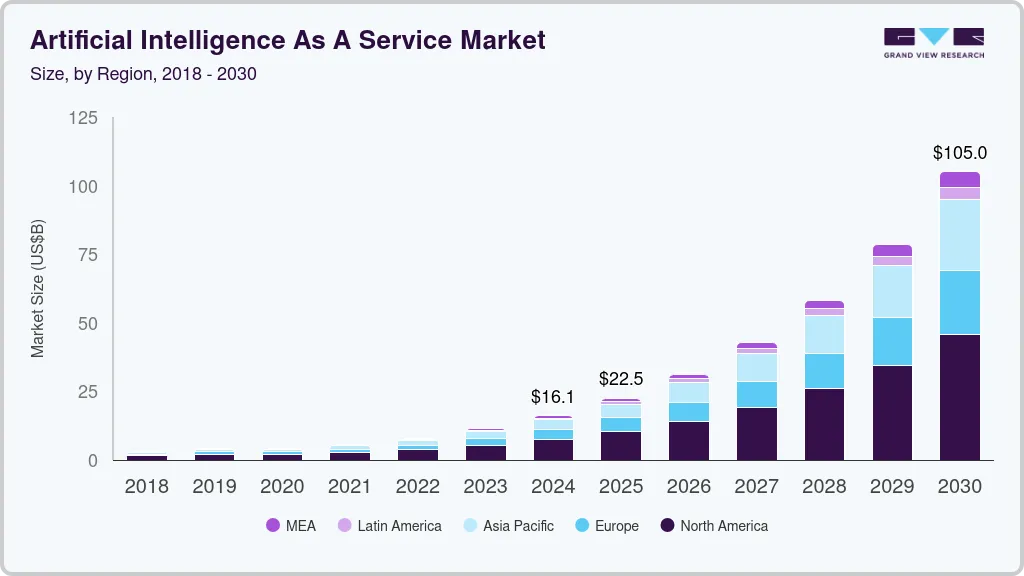
The first graphic illustrates the rapid expansion of the Artificial Intelligence as a Service (AIaaS) market across global regions including North America, Europe, Asia-Pacific, and Latin America. The stacked growth curve demonstrates how organizations across industries are adopting AI-powered platforms to automate business processes, improve decision-making, and accelerate digital transformation. As cloud computing infrastructure becomes more accessible and machine learning tools become easier to deploy, companies are increasingly integrating AI capabilities into enterprise software ecosystems.
This trend directly supports the strategic vision behind XmartPro.ai As organizations adopt AI-enabled SaaS platforms, they require tools that integrate product management, development workflows, and operational analytics into one intelligent environment. XmartPro.ai addresses this demand by embedding AI capabilities directly into the product lifecycle, enabling teams to move from product discovery to deployment while leveraging AI-driven insights. As the AIaaS market expands globally, platforms that combine lifecycle management with AI assistance will become critical infrastructure for modern software organizations.
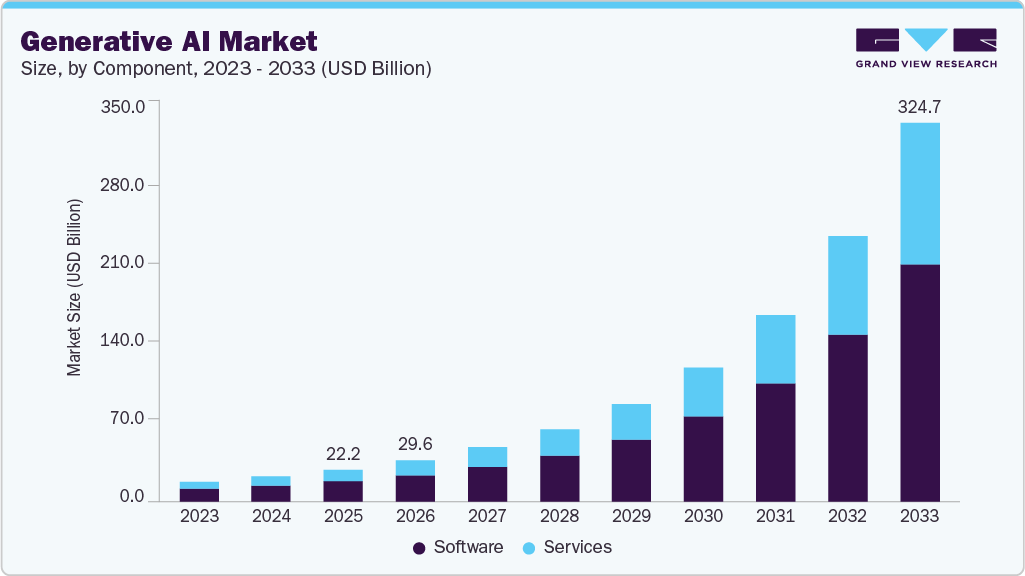
The second graphic focuses specifically on the Generative AI market, which is projected to grow dramatically over the next decade. Generative AI technologies such as large language models, code generation systems, and intelligent assistants are transforming how organizations build software and manage knowledge workflows. The chart highlights how both software and services segments are expanding rapidly as enterprises integrate generative AI into development tools, customer support platforms, analytics systems, and operational automation environments.
For platforms like XmartPro.ai, generative AI represents a fundamental shift in how software solutions are designed and delivered. Instead of relying solely on traditional development processes, teams can leverage AI to accelerate architecture design, generate product documentation, and automate portions of the coding lifecycle. XmartPro.ai integrates these capabilities through its AI-assisted development framework, allowing product teams to convert ideas into working prototypes faster while maintaining architectural integrity. The growth of the generative AI market therefore reinforces the long-term relevance of AI-assisted product engineering platforms.
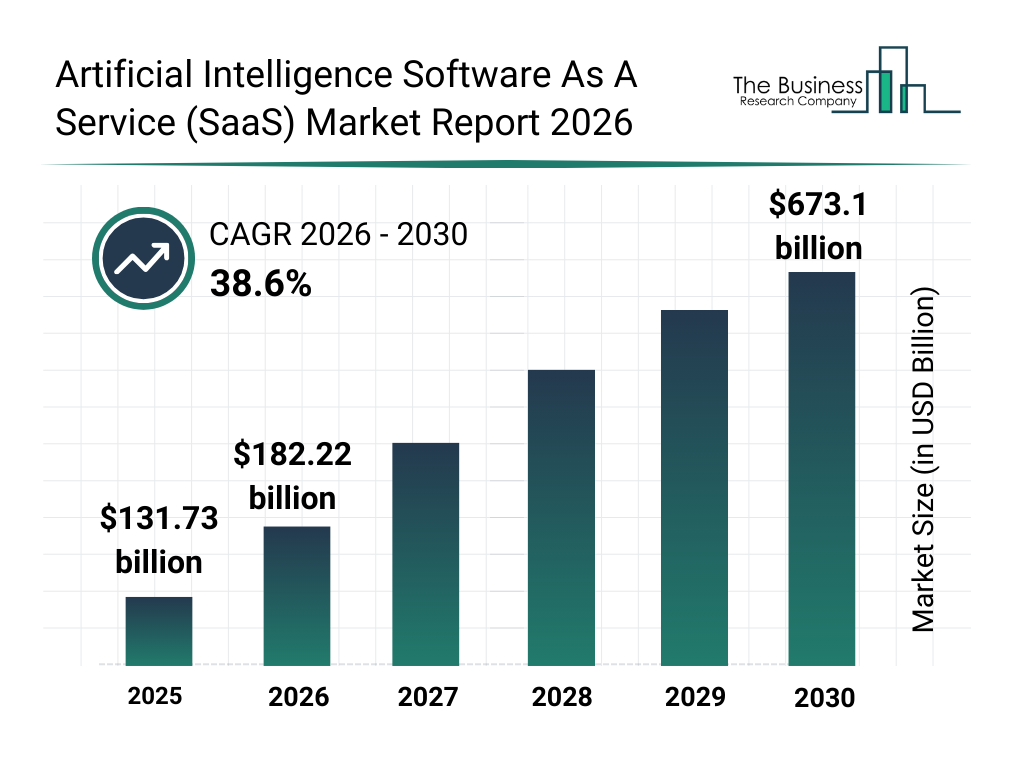
The third graphic presents projections for the Artificial Intelligence Software as a Service (SaaS) market, highlighting both its expected market size and compound annual growth rate (CAGR). According to the forecast shown in the chart, the AI SaaS market is expected to grow at a CAGR of approximately 38.6% between 2026 and 2030, reaching a market size exceeding $673 billion. This extraordinary growth rate indicates that AI capabilities will become a standard feature of enterprise SaaS platforms rather than an optional enhancement.
This rapid expansion creates a major opportunity for integrated platforms like XmartPro.ai. As organizations increasingly rely on AI-enabled SaaS solutions, they require platforms capable of orchestrating complex development ecosystems while providing intelligent automation. XmartPro.ai is designed specifically for this environment, combining product lifecycle management with AI-assisted development, DevOps monitoring, and operational analytics. By aligning with the broader AI SaaS market trajectory, the platform positions itself as a next-generation infrastructure layer for AI-driven product development.
The three graphics collectively highlight a powerful trend: artificial intelligence is becoming a foundational component of modern enterprise software platforms. As AIaaS, generative AI, and AI SaaS markets expand rapidly, organizations are increasingly seeking integrated platforms that allow them to harness these capabilities effectively. The growth of the AI SaaS ecosystem confirms that future software development environments will rely heavily on intelligent automation, data-driven decision-making, and AI-assisted engineering workflows.
XmartPro.ai was designed precisely for this emerging landscape. By integrating AI capabilities across product management, project execution, DevOps operations, and continuous improvement processes, the platform enables organizations to participate fully in the expanding AI SaaS ecosystem. Instead of treating AI as a standalone tool, XmartPro.ai embeds it directly into the lifecycle of innovation, ensuring that product teams can leverage AI insights at every stage of development—from idea discovery to operational evolution.
Lessons from Enterprise Experience
My experience working with organizations such as Bayer, Zebra Technologies, and Uber exposed me to highly sophisticated engineering environments where product management, software development, and operational monitoring operate at large scale. These organizations have developed advanced processes for coordinating thousands of engineers across complex technology stacks. Observing how these systems functioned provided valuable insights into the characteristics of high-performing engineering organizations.
One common pattern across these organizations was the presence of specialized systems supporting different stages of development. While each system was optimized for its specific purpose, the lack of integration between them often created coordination challenges. Product strategy discussions might occur in one environment, engineering execution in another, and operational monitoring in yet another platform. Bridging these systems required significant manual effort.
Another important lesson from enterprise environments is the importance of feedback loops. High-performing teams rely heavily on operational data to guide product decisions. Metrics such as user engagement, incident frequency, and feature adoption rates provide critical signals about product performance. However, when these signals are distributed across multiple systems, it becomes difficult for product teams to act on them quickly.
XmartPro.ai was designed to incorporate these lessons by integrating enterprise-grade lifecycle management into a single platform. By connecting product strategy, engineering execution, DevOps monitoring, and customer support insights, the platform enables organizations of any size to benefit from the operational intelligence typically available only in large enterprises.
Results and Impact
The development of XmartPro.ai demonstrated the practical benefits of combining AI-assisted engineering with integrated lifecycle management. By structuring development around modular architecture and AI-assisted workflows, it became possible to prototype complex features significantly faster than traditional development approaches would allow. Tasks that previously required weeks of experimentation could often be implemented within hours.
One of the most noticeable improvements came from the ability to explore multiple architectural options quickly using AI-assisted development threads. Instead of committing to a single implementation strategy early in the process, engineers could evaluate several alternatives simultaneously. This capability increased both development speed and design quality because the best solution could be selected from multiple candidates.
Another significant benefit was improved alignment between product strategy and engineering execution. Because XmartPro.ai integrates product planning with project management and DevOps monitoring, teams can track how individual development tasks contribute to strategic objectives. This transparency reduces the risk of misalignment and helps organizations prioritize work that delivers the greatest business impact.
Overall, the platform enabled an estimated 60 percent improvement in development productivity within internal projects. This improvement came not from replacing engineers but from empowering them with tools that reduce coordination overhead and accelerate experimentation. By integrating AI capabilities into a connected lifecycle platform, XmartPro.ai transforms how teams move from ideas to deployed software solutions.
Conclusion
The development of XmartPro.ai represents the convergence of several technological trends that are reshaping the software industry. Artificial intelligence is transforming how engineers design and implement systems. DevOps practices are redefining how software is deployed and operated. Product management methodologies are evolving to emphasize continuous feedback and rapid iteration. Bringing these elements together into a unified platform creates new possibilities for accelerating innovation.
Throughout my career I have seen how fragmented tools and disconnected workflows slow down development efforts. Engineers spend valuable time navigating multiple systems rather than focusing on solving meaningful problems. XmartPro.ai addresses this challenge by integrating the entire product lifecycle into a single platform where strategy, development, operations, and improvement are tightly connected.
Artificial intelligence plays a critical role in this vision, not as a replacement for human expertise but as a powerful collaborator. When guided by strong engineering discipline, AI systems can accelerate development, explore alternative design approaches, and automate repetitive tasks. This partnership allows engineers to focus on creative problem solving and architectural thinking.
As the software industry continues to evolve, platforms that combine AI-assisted development with integrated lifecycle management will become increasingly important in shaping how innovative products are conceived, built, and delivered. XmartPro.ai represents my contribution to this evolution—a platform designed to help teams transform ideas into impactful solutions faster while maintaining the engineering discipline required to build reliable, scalable enterprise software. By integrating product strategy, project execution, DevOps intelligence, and continuous improvement into a single AI-enabled environment, XmartPro.ai empowers product builders to move from idea to impact with greater speed, clarity, and confidence.
If you are interested in learning more, I invite you to visit https://xmartpro.com, our corporate website, where you can contact our sales teams, explore ISV partnership opportunities, and learn more about investment and collaboration initiatives surrounding the XmartPro ecosystem. You can also explore the live platform at https://xmartpro.ai, where you can experience the SaaS solution directly and request a demonstration of the application. If you found this article valuable, I would truly appreciate your feedback—please feel free to leave a comment, share your thoughts, and rate the blog. Your insights help shape future discussions and contribute to building a stronger community around AI-driven product engineering and innovation.
What's Your Reaction?














Thank you for your time and thoughts. Comments are reviewed before publication to ensure they meet Manuel’s Blog standards. Please check back in a few days. If you have any issues, contact support.